
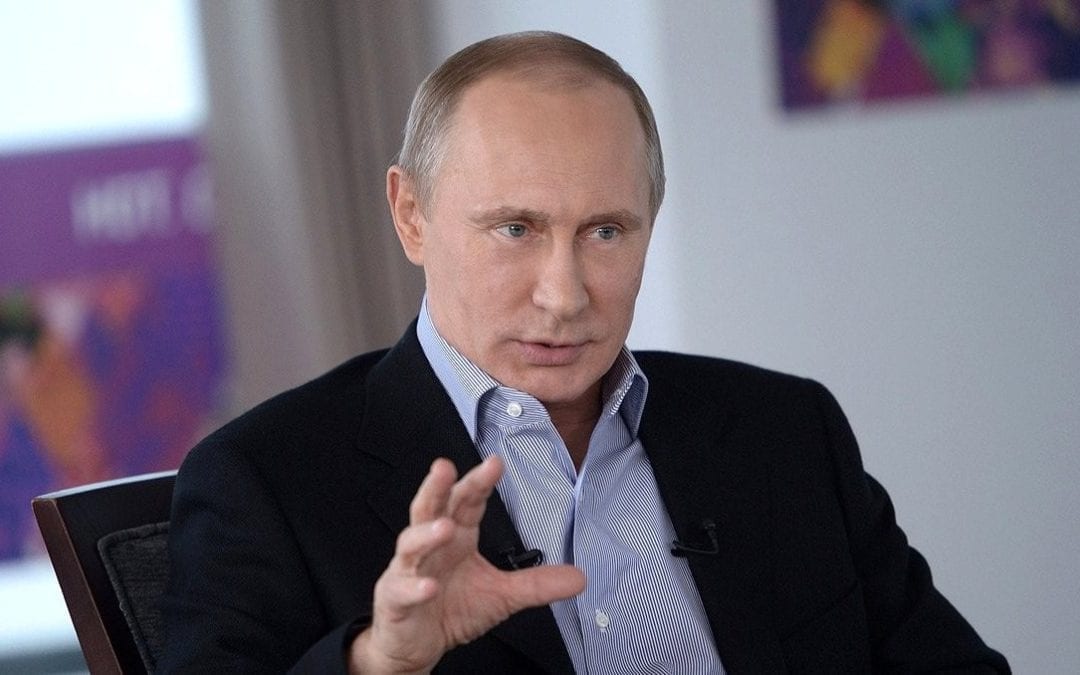
Interview Summary:
On October 11, SMA hosted a speaker session presented by Dr. Yuval Weber as a part of its SMA EUCOM Speaker Series.. Yuval is the Kennan Institute Associate Professor of Russian and Eurasian Studies at Daniel Morgan Graduate School (DMGS) and was the inaugural DMGS-Kennan Institute fellow.
During his presentation, Dr. Weber addressed two key questions: 1) How is power practiced in Russia? and 2) What motivates Russian President Vladimir Putin in the Russian regime? He explained that Russia believes that the contemporary national order should have begun with the end of the Cold War (1989) rather than the collapse of the Soviet Union (1991) and that Putin strives to revise the international order to make the world look more like it did in 1989 than it did in 1991. He also explained that there are two competing visions of power in Russia: the “Iron Tsar” and the “Adjudicator-in-Chief.”
Dr. Weber highlighted the sources of Putin’s power and explained how he has been able to secure his leadership over an extended period of time. He then discussed the problems facing Putin and how he could potentially lose power. To conclude his presentation, Dr. Weber highlighted several questions that Putin’s core supporters should ask themselves and addressed the questions of “who comes next?” and “what can we expect in the future?”
Listen to Interview
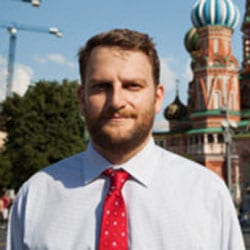
Yuval Weber, Ph.D., is the Kennan Institute Associate Professor of Russian and Eurasian Studies and was the inaugural DMGS-Kennan Institute fellow. Dr. Weber taught at Harvard University, where he was a Visiting Assistant Professor in the Department on Government and a Kathryn W. and Shelby Cullom Davis Research Fellow at the Davis Center for Russian and Eurasian Studies. His work has appeared in Problems of Post-Communism, International Studies Review, Survival, Cold War Studies, Orbis, and the Washington Post.