
Marco Zambotti, PH.D.
Adjunct Professor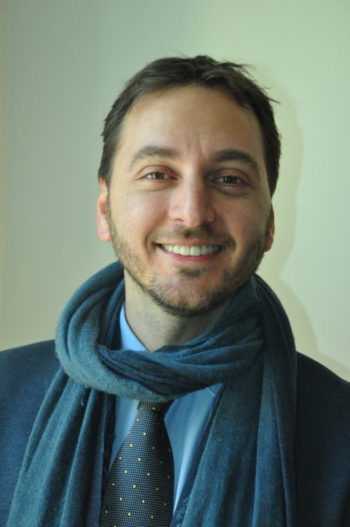
For Media Inquiries:
Marco Zambotti is a Senior Lecturer of European politics and statecraft at the Daniel Morgan Graduate School of National Security.
Marco has broad experience analyzing European affairs and transatlantic relations both in academia and the policy world. His research focuses on European foreign and security policy, enlargement, democratization, transition and stabilization, Europeanization, European neighborhood policy. He regularly teaches graduate courses on Europe at the Johns Hopkins University’s School of Advanced International Studies (SAIS). He also teaches courses at the intersection of economics and security at the Center for Advanced Governmental Studies of the Johns Hopkins’ Krieger School.
He has a long affiliation with the World Bank, where he specializes in the links between development, conflict and security. He was in the core team of the UN-WB flagship report ‘Pathways for Peace: Inclusive Approaches to Prevent Violent Conflict’ (2018), and has worked on a variety of issues ranging from risk analysis to partnerships in fragile environments, from economic development in conflict situations to food security.
Marco received MA and PhD from Johns Hopkins University SAIS, as well as an undergraduate degree in political science from the University of Urbino in his native Italy.
RECENT
MEDIA
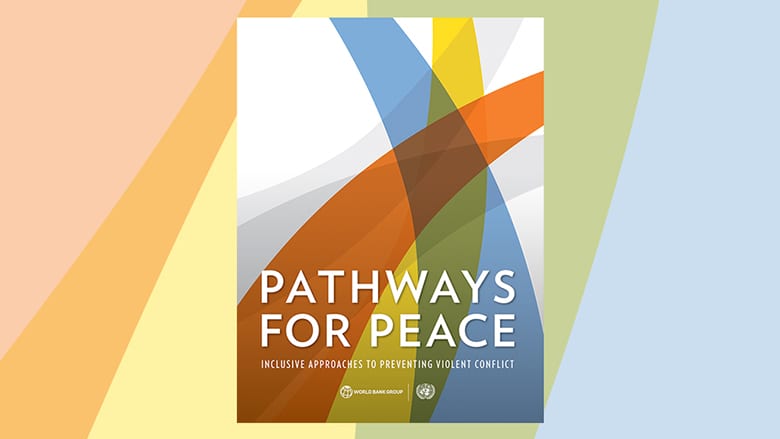
Mar 1, 2018 Pathways for Peace: Inclusive Approaches to Preventing Violent Conflict (The World Bank)
Violent conflicts today are complex and increasingly protracted, involving more non-state groups and regional and international actors. It is estimated that by 2030—the horizon set by the international community to achieve the Sustainable Development Goals—over half of the world’s poor will be living in countries affected by high levels of violence. Information and communications technology, population movements, and climate change are also creating shared risks that must be managed at both national and international levels.
RECENT
MEDIA
Mar 1, 2018 Pathways for Peace: Inclusive Approaches to Preventing Violent Conflict (The World Bank)
Violent conflicts today are complex and increasingly protracted, involving more non-state groups and regional and international actors. It is estimated that by 2030—the horizon set by the international community to achieve the Sustainable Development Goals—over half of the world’s poor will be living in countries affected by high levels of violence. Information and communications technology, population movements, and climate change are also creating shared risks that must be managed at both national and international levels.